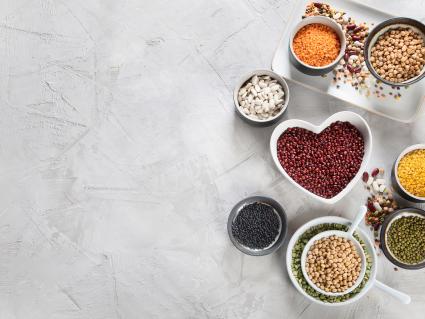
New One-on-One/ Hands-on Cooking Classes

Let Eric Sharer, MPH, RD, CSO, CDN teach you how to meet your unique nutritional needs with personal cooking and nutritional instruction.
Take control of your health with one-on-one cooking instruction!
With Eric Sharer's extensive culinary arts training together with his expertise in nutrition, he will provide one on one hands-on cooking instruction in a calm and casual learning environment at our Delmar location. Instruction will include knife/culinary skills to make your time in the kitchen more efficient and enjoyable. Each class will last 60 to 75 minutes and all the food prepared will be yours to enjoy and take home. Please bring containers for the food and a reusable bag if possible. Eric will take care of the grocery shopping and work with you to plan an individualized meal based on your unique nutritional needs.
Eric will teach you how to make quick and healthy recipes and cooking techniques to maximize the healing and disease fighting potential of your food, while minimizing the time and energy you spend in the kitchen. Reclaim your excitement about food and cooking!
Cost:
Initial Lesson: $225 plus the cost of groceries(estimated cost to be $30-$50 depending on the recipes)
Follow up Lesson: $200 plus the cost of groceries(estimated cost to be $30-$50 depending on the recipes)
The maximum number of participants is 3, unless discussed in advance with Eric.
Pre-registration is required. All classes must be paid for in full at least one day before a class is scheduled.
Call today! 518.689.2244
New Resolutions and Taking Your Life Back

How to break bad habits and retrain your brain!
With the New Year recently taking shape, now is a time when many people make a New Year’s resolution to break a habit. All individuals develop and create habits within their lifetime, whether it be good or bad. There are some habits that we develop that help us to be productive and consistent, such as your morning routine, getting ready for work, or going to your exercise class everyday in the morning. You feel accomplished and ready to start your day on the right foot. However there are other habits we develop that can inhibit our abilities to achieve our greatest potentials. For over 160 million Americans this would include poor nutrition, lack of exercise, addiction, or poor self-control.
If any of you are suffering from a difficult habit and have the willfulness to make a change, I would highly encourage you to read the book, “The Power of Habit: Why We Do What We Do in Life & Business” by Charles Duhigg. I’d like to briefly share with you a personal story that helped me change my bad habit: poor nutrition. I’ve never been a skinny woman, but last year after getting on the scale that I hadn’t seen in nearly a year and reminiscing through pictures of myself with friends and family from a few years ago, I realized how much weight I had truly gained. Last I re-call, 50-60 pounds are not added within one day. After coming to this realization, I became depressed and very upset with myself and felt like a failure. After reflecting on this, I also realized that I am the only one who can make any change about my weight. I decided I needed to start taking care of myself before I can take care of others. It was time to break the bad habit. According to the European Journal of Social Psychology, it takes an average of 66 days to form a habit, however this number can range anywhere from 18-254 days depending on the individual. I purchased this book and read it. I enrolled in a Nutrition program starting in August 2018 to guide me on appropriate nutrition for my body and added in exercise more regularly. I made this my NEW habit. I’m happy to report that since late August 2018, I was able to accomplish losing nearly 30 pounds and found a new spark in myself. This form of change can be applied to any habit that you’d like to break. Habits emerge because the brain is constantly looking for other ways to conserve effort. The habit formation within our brain is a three-step loop: automatic mode, routine (physical, mental, or emotional), and finally reward. Habits can be extremely powerful because they create neurological cravings, and the cravings emerge so gradually that you don’t even realize they exist. In order to create a new habit, you need to put together a cue, a routine, and a reward and cultivate a craving that drives the loop. You can erase a bad habit by using the same cue, provide the same reward, but change the routine. One ingredient that is necessary for some habits is belief. To succeed at forming this new habit, you need a keystone habit that creates our culture and environment - such as a daily gathering of like-minded individuals to help find the strength to overcome obstacles. Habits emerge within the brain and often we don’t have the ability to control them, but we’re conscious and aware of them. With that said, it’s still our responsibility to cultivate our own habits and take care of our own life.
What is your New Year’s Resolution and are you ready to take back your own life?
News from the Integrative Health Symposium

Dr. Stram and Dr. DiRoma attended the Integrative Health Symposium in NYC. Here, Dr. DiRoma shares some key take-aways from the conference.
Last month Dr. Stram and I were down in NYC for the Integrative Health Symposium. There were many speakers in attendance including Deepak Chopra and David Perlmutter (author of The Grain Brain). The symposium had a strong emphasis on nutrition and health. There was a lot of talk on how excess sugar and carbohydrates are contributing to chronic health problems such as diabetes, heart disease, dementia, and cancer. Excessive sugar intake can lead to weight gain due to excessive storage of fat facilitated by the hormone insulin. In the past we thought that fat cells were not active and were just stored packets of energy. But now we know that fat cells not only produce hormones that control satiety but also produce inflammatory cytokines. These inflammatory cytokines can cause joint pain, muscle pain, fatigue and brain fog, and depression and anxiety. Chronic inflammation over time may eventually lead to degenerative arthritis, atherosclerosis and heart disease, and dementia. This is why it is extremely important to adopt a way of eating that limits the daily intake of refined sugar, sweets, starchy vegetables, and refined grains.
Another cause of inflammation is an immune reaction that starts in the gastrointestinal (GI) tract. Certain foods and microorganisms may cause the immune system to start attacking itself leading to autoimmune disorders. Examples include gluten from wheat and celiac disease, yersinia and thyroid disorders, and proteus and arthritis. At the Stram Center we offer food allergy/sensitivity testing to look for chronic inflammatory reactions to 96 different foods. We are now in the process of incorporating a more comprehensive stool test that will be able to assess all the microorganisms in the gut—bacteria, fungi, parasites—and assess for inflammation and permeability. Inflammation in the small intestines can lead to hyper permeability of the lining which in turn can lead to an immune response that can cause inflammation throughout the body.
It is becoming increasingly apparent that the health of ones gastrointestinal tract affect the health of the entire body. Eating a poor diet and taking certain medications can have a negative impact on the health of GI tract leading to chronic inflammation and even autoimmune disorders. With the use of functional testing we can more specifically find and remove potential causes of inflammation.
NIA Focus: Feet and Heel Lead
Between the ages of 5 and 21 I took ballet and modern dance classes. When I walked, my feet were in habitual turn out. This was My Body’s Way of walking.I was proud of my ballet feet but eventually this caused me to have problems with my back.
It wasn’t until I started taking Nia in 2009, that I was shown that the body’s natural way of walking was in parallel.The healthy skeleton is built with the feet parallel directly under the pelvis.The Body’s Way of walking is the heel leads and then the whole foot comes down.If the foot is in turn out, the heel lead comes down on the side of the heel, throwing the pelvis, hips and spine out of alignment.This could cause eventual knee, hip and back problems.
I still catch myself walking with a slight turn out but quickly adjust my walk.When I walk now, my mantra is “heel lead, whole foot, heel lead whole foot, heel lead whole foot….”
Read more about the Stram Center Nia Classes
Nurturing Our Health in the Spring
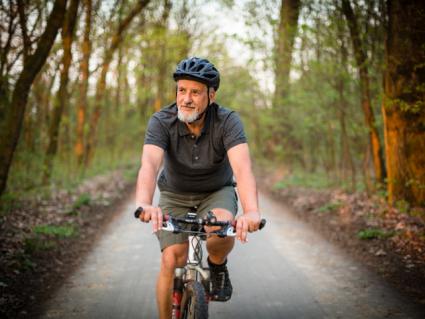
The transition from spring to summer is a magical time—it is a time of rebirth, of growth, of “re-creation!” The cold, monotonous days of short daylight which define winter have transformed into the crisp brilliance of spring, opening up to the threshold of summer. How can we nurture our health at this time? Below I have compiled several ideas that can help you feel more balanced and whole:
- Get outside: Being outdoors in nature is healing. Do something you love outside—take a walk or a vigorous hike, ride a bicycle, garden, have a picnic, walk the dog, meditate, or rest in a hammock beneath some trees. Do what brings you joy amongst nature, and even better, stand barefoot on the soil or grass—this is known as “earthing”, and it can neutralize harmful positive ions of the body with the healing negative ions of earth. Getting some sunshine will also help boost your vitamin D level!
- Detoxify: This is a great time to cleanse your body for a couple of days or a couple of weeks to improve your vitality. This could include avoiding alcohol, added sugars, and processed foods; eating organic vegetables and fruits with no flesh foods/meat, including a few prolonged nightly fasts (ex: no food from 5 pm to 11 am the next day); drinking 8-10 glasses of filtered water per day; drinking a “detox broth” made from kale, parsley, cilantro, chard, dandelion, and burdock root; encouraging bowel elimination with magnesium citrate and clearing toxins with a toxin binder such as bentonite clay or activated charcoal; sweating out toxins with the use of a sauna and aerobic exercise; self-reflecting/journaling/meditating; and increasing restorative sleep.
- Practice mind-body therapies: There are a variety of mind-body therapies available, all of which can help to induce the “relaxation response”. They help to tone down activity of the sympathetic nervous system and increase that of the parasympathetic nervous system, which in turn allows for a stronger immune system. We also feel much better as a result! Choose a modality that “resonates” or “feels right” to you. Some examples include massage, meditation, Reiki, Healing Touch, acupuncture, Tai Chi, and foot reflexology, but there are many others. I personally practice Transcendental Meditation on a daily basis; after having tried many different forms of meditation, this form works best to bring me into a deepened state. I also love to walk through labyrinths, which allow for both walking and stillness meditation and prayer; I highly recommend that you learn about labyrinths if you are not already familiar with them. Enjoy!
Nutrition and Health Conference Boston with Andrew Weil
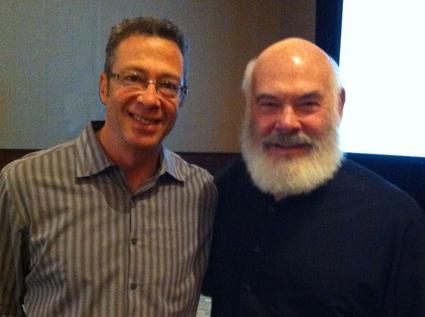
Last week I had the opportunity to have lunch with Andrew Weil at the Nutrition and Health Conference in Boston, MA. I am continually struck by his ability to decipher complex conditions and the science behind them and formulate this understand back to physicians, scientists and the general public in concise and understandable language.
His personal commitment to the advancerment of Integrative Medicine and to the health of our society is paramount and has been and continues to be lightyears ahead of anyone in the healthcare field.
My relationship with Andrew Weil goes back 10 years when I trained under him during my Fellowship in Integrative Medicine at the University of Arizona Health and Science Center.
Nutrition Tip for Breast Cancer Awareness Month!

Decreasing alcohol intake can help with weight management which can have a direct impact on estrogen-levels.
Given that breast cancer is the second most common type of cancer among women in the US, having prevention at the forefront of our minds is best. While there are some risk factors that are out of our control, such as genetic predisposition, there are some within our control that heavily influence what direction our cells modify and whether we develop cancer.
Several contributing risk factors include lifestyle habits, such as diet, alcohol consumption, and weight. To reduce your risk for breast cancer you may consider taking a closer look into how well you manage your behaviors around lifestyle management. Many of us get deeply driven by our built or innate habits. But like many things in life, the opportunity for change is always present for those open to it.
While we know that there can be nutritive components to red wine, we also recognize that the more alcohol consumed, the higher the risk of developing breast cancer. If moderation is tricky, consider abstaining from alcohol all-together and implement other healthy, comforting habits in place of regular drinks, such as a fancy “mocktail” or a soothing nighttime tea.
When it comes to weight management, alcohol consumption is often a major influencer. You might find that in limiting or eliminating your intake of alcohol, you’re able to manage your weight more easily. That’s not only due to the caloric content of alcoholic beverages (which range greatly) but also because alcohol itself disrupts the metabolic pathways and can impair our digestive and detoxification organs from working efficiently. We know that excess body fat is associated with blood insulin and estrogen levels and, likewise, directly impact our risk for breast cancer.
So, what is one to do? Eating moderate portions and consuming a mostly plant-based diet with adequate high-quality protein and healthy fats is a game-changer! Add some regular physical activity, proper sleep and stress reduction practices, and you’ve got the ideal breast-cancer-fighting recipe.
Nutrition, Food Sensitivities, and Lyme Disease

When it comes to nutrition for Lyme disease treatment, we know that every person with Lyme disease and/or tick-borne illness experiences different symptoms.
For some, joint pain, brain fog, and fatigue are the most prominent issues. Others develop food sensitivities and gastrointestinal or digestion complications. To make matters even more complex, these symptoms can have cyclical causation—the brain fog or joint pain could be caused by food triggers, for instance.
We often see food intolerance or sensitivities arise with our patient who have Lyme and co-infections. Lyme is stealthy bacteria and this disease is often referred to “the great mimicker.” It can create food sensitivities by having the body start to recognize certain foods as invaders. This causes the immune system to fire every time that food or allergen enters its system, causing inflammation and other symptoms.
Food sensitivities are highly individualized and as such, each person’s treatment is specific to their condition and how to foster healing. That being said, it can be helpful to remove some top contenders. For most people, the simplest initial step can be the removal of gluten and dairy. This lowers the immune load and can start the process of repair, as the body stops attacking these possible irritants. Additionally, it can always help to introduce foods that promote healing and fight inflammation.
It’s important to pay attention to your particular symptoms and how you respond to any changes in foods, life-style, eating patterns (fast vs slow, for example), sleep habits, and movement. Working with the right practitioner who can take all this information into account is key because we know that in order to solve the problem and start feeling better, it's rarely as easy as taking a pill or adjusting one hormonal imbalance. Everything is connected. And that’s what makes each of us so wonderfully and uniquely magnificent.
Nutritionist VS Registered Dietician Nutritionist

What is the difference between a nutritionist and a registered dietician nutritionist?
Did you know March is National Nutrition Month? The Academy of Nutrition and Dietetics started this campaign to spread awareness of nutrition and the important role Registered Dietitian Nutritionists play in utilizing dietary interventions to improve health.
Registered Dietitian Nutritionists (RDNs) go through rigorous training, supervised practice, and credentialing examination to obtain their certification. From there they are able to practice Medical Nutrition Therapy, using their knowledge of food and body science to facilitate healthy changes.
In this day and age, there’s a lot of information circulating about nutrition and the best diet for any given condition. With everyone claiming to know what’s best it can be very confusing! It’s often hard to decipher fact and fiction. First, it’s important to note the vast difference between “Nutritionists” and “Registered Dietitian Nutritionists.” While there are no regulations around the label “nutritionist,” there are many years of study, practice, and continued education behind a Registered Dietitian or RDN.
That being said, even RDNs can vary in how they practice. That’s because the world of nutrition is incredibly complex and with the perpetual new research, it’s impossible to be an expert in all specific areas of study. Additionally, there are RDNs who took what they learned in school and have not adapted much—they practice the basics in one area of specialty. There are also RDNs who are incredibly knowledgeable but lack counseling skills to properly relate to patients, build a trusting relationship, and navigate the hard yet courageous work of change.
For some, a dietitian who can work on some basic lifestyle changes is what they need most. For others, they might find that the basics just aren’t cutting it and to fully address their health issues they need someone who can take a different approach, looking at some of the nitty gritty, concerning hormones, autoimmune conditions, chronic symptoms, gastrointestinal complications, and/or disordered eating. March 11th is Registered Dietitian Nutritionist Day so make it a nutritious day and consider what a RDN could do for you!
To read more about what RDNs can do for you: https://www.eatright.org/food/resources/learn-more-about-rdns/10-reasons-to-visit-an-rdn
Oh My Aching Head!

Headaches are a large category including migraine, sinus, ocular, hormonal and tension as just some of the types. Why do we, as Americans, have so many headaches?
Headaches, according to the CDC, cost about 2.5 billion $ per year in lost productivity and missed work. About 1 in 4 household has at least 1 person who suffers from migraines with women outnumbering men 3:1. Headaches are a large category including migraine, sinus, ocular, hormonal and tension as just some of the types. Why do we, as Americans, have so many headaches? Peering through the lens of Functional Medicine, we search for underlying causes. Headaches are a form of inflammation and the root of that inflammation can be traced to some of the following:
- Nutrition: Deficiencies/Excess/Low Blood Sugar
- Food Allergies
- GI Disturbances/Dysbiosis or imbalances in our gut bugs (bacteria)
- Toxins/Infection/Heavy Metals
- Structural/Spinal Imbalances/TMJ
- Chronic Stress/Poor Sleep
- Trauma (Physical/ Emotional)
- Hormonal Fluctuations/Imbalances
- Genetic Predispositions
- Weather/pressure changes
Uncovering some common causes of headaches:
- Food can be a trigger. Sometimes you can have a gut or immune reaction to food. That reaction or inflammatory response can manifest as a headache. Many people can reduce or eliminate headaches by changing what they eat. The most commonly reactive foods are gluten, dairy, peanuts, soy, eggs and sugar. Additionally, nitrates as food preservatives as well as sulfates in wine can trigger headaches. Keep a food diary to tract symptoms and you may uncover if food is an issue for you. Eliminating foods for at least 14 days is a good remedy to calm that inflammation.
- Dehydration can lead to headaches. Your body is about 70-80% water, that equals approximately 14-15 gallons! You need water to purify your system and neutralize waste products. Feeling foggy or unclear, which many people experience, has about a 95% chance of being due to lack of water in the body. So many common health challenges like headaches, fatigue, nausea and constipation are directly connected to dehydration. Pump up your water consumption and see how you feel
- Digestive issues or imbalances in gut bugs have an impact on our immune system and the balance of our whole body. Whether you have GERD, IBS, Constipation or any digestive symptom, headaches can be a symptom of those imbalances. Functional Medicine takes a comprehensive view of the gut and the bugs that live there. The steps to getting your gut healthy can improve many symptoms including headaches.
There are many factors that can impact headaches and they can be a debilitating imbalance that negatively impacts our daily life. Functional Medicine offers hope by getting to the root cause.
Here’s a refreshing summer drink!
Lemon Basil Sparkling Water:
3 lemons
1 bunch basil (save a few sprigs of basil for garnish)
2 25 oz. bottles chilled sparkling water (you may substitute with drinking water)
Directions: Rinse the basil, set a few sprigs aside for garnish, put the rest into a large pitcher or glass container. Take a wooden spoon and crush some of the basil leaves gently against the side of the container. Cut 2 of the lemons into 1/8 inch slices and place in the container with the basil. Pour the sparkling water into the container with the basil and lemon. Juice the remaining lemon and pour into the water. Stir and serve over ice, garnish drinks with a sprig of basil. Approximately 8 servings.
Recipe from http://twinchefs.net/recipe/lemon-basil-sparkling-water/