Winter Renewal with Ming Men (Gate of Destiny)
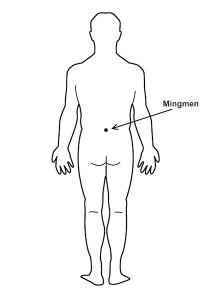
Finding inner stillness with an acupuncture channel in your lower back - Ming Men.
The winter season represents a shift into the water aspect of the five elements, or more properly translated, the five movements. Humans are advised to follow nature and move inwardly to the roots and core of our being. What is extraneous is shed, and what is central is embraced.
To aid this movement we have the fourth point on the governing channel - an acupuncture channel that follows the center line of the back. This point is called Ming Men which roughly translates to "Gate of Life" or "Gate of Destiny," and it is regarded as one of the strongest points to strengthen the overall constitution. Ming Men is located at the lower border of the second lumbar vertebra, roughly opposite the belly button.
For this exercise, sit in the edge of a chair in a quiet environment. Use one or both palms to gently rub your lumbar (lower) back until it feels very warm, but not uncomfortable. Once warmed, allow your hands to rest in your lap touching each other, and let the focus of your mind come to rest in your lower abdomen in a state of quietude and stillness. Still waters run deep, and the water movement of the body is the home of the yuan qi, or "original qi". Yuan qi is the movement of life in its natural tract, in harmony, and represents an inherent wisdom that makes itself clear in the kind of quiet that you find in a forest's deep winter, the sound of every snow flake falling clear and steady. Rest in that peace for a while. Repeat the process of warming the back and being still two more times, for a total of three.
When you are focusing on this exercise, focus lightly - the mind should guide the process as gently as a hand would hold an ancient parchment. Stillness isn't always easy to find. It is something we open into, and by its nature cannot be forced. Disturbed waters don't settle from being pushed or manipulated, just observe the water to be what it is, and it will find it's own stillness.
Winter Solstice and Chinese Medicine
There are a great many reasons and methods to celebrate the winter holiday season. Numerous religious holidays, New Years and the American holiday of Thanksgiving have a tendency to keep us moving at top speed to keep up. In Chinese medicine, the coming of winter is associated with the movement of the water archetype.
With fall, we had the metal archetype- pulling in that which is most valuable and letting go of what is not essential at the time, just as the plants store their nutrients and shed their leaves. With winter we have a time of stillness to sit deep within ourselves and avoid arousing excessive passion. A time to embrace solitude and introspection, and a truly perfect time for the giving of thanks. A good image is the crisp clarity of a deep winter’s night, the moon shining down brightly through the dark as an embracing stillness is felt as a presence all around, and precious things are remembered.
In addition, the winter solstice itself is a powerful time in the tradition of Taoist alchemical practices. The power of the moment as the earth’s yin movement (toward increasing darkness) mysteriously transitions to a yang movement (toward increasing light) is reveared as one of the most important times of the year. Within the exact moment of the transition, there is thought to be a moment of perfect harmony, a mysterious blending of the yin and yang that opens the possibility of new creation and rebirth. It is a time to bring together those parts of ourselves we hold in the light, and those that we hold in the dark. A time of redemption, reconciliation, acceptance and rebirth.
Oh, and P.S.- take it easy on the cookies and spirits! There, I got it out of my system. Happy Holidays!
Women’s Health Care Screening Recommendations

As we bloom into spring, it is imperative to think about the importance of screenings. Screenings are meant to improve one’s health, reduce relative risks and treat conditions early if present. It may feel that life is too busy and there is no time for self-care, or maybe you are just not sure where to start.
The following are some main areas of consideration and their corresponding recommendations. Risk assessments are changing regularly as we move throughout our lives and at the Stram Center we value your health and want you to feel your best. Below are a few recommendations for women’s health screening...
Mammogram-
According to National guidelines, the recommended age to start annual mammograms is between 40 and 50. The US Preventative Task Force recommends women start at age 40 and continue screenings every 2 years through the age 74.
According to the American Cancer Society, it is recommended for those of average breast cancer risk (meaning no family history) to start screenings at age 40 and continue annually through age 55. After age 55 it is recommended to have screenings every other year through the rest of life as long as the individual is expected to continue to live another 5-10 yrs. For those with high risk factors, you should start screenings annually at age 30. Screenings in these individuals may also include an additional MRI of the breast. High risk persons include those with a first degree relative with breast cancer history, carry the BRCA1 or BRCA2 gene mutation or radiation to the chest at a young age (under 30).
Self-breast exam continues to be a simple baseline screening that women can continue to do once per month.
Bone Density-
Post-menopausal women, or those post hysterectomy at a younger age, are at a higher risk for osteopenia or osteoporosis. More than 50% of postmenopausal women will experience an osteoporotic fracture within their lifetime.
The age for women recommended to get a bone density exam according to the US Preventative Task Force is 65 yrs or greater. Included are those under the age of 65 with a fracture risk equal to or greater than 10 years.
A DXA screening gives providers a better understanding of what supplemental therapies could be used to prevent further bone loss for the patient. DXA stands for dual-energy x-ray absorptiometry of the hip and lumbar spine. This in conjunction with lifestyle changes are great ways to promote bone health.
Colonoscopy-
The American College of Gastroenterology, the CDC, the American Cancer Society, and the US Preventative Task Force recommend to start screenings with colonoscopy at age 50, however is advised to screen earlier if risk and familial tendency is indicated. It is also recommended to repeat the screening in 10 years if there are no polyps on the initial exam. If there is a polyp, depending on size and quantity, a follow up is indicated in 1-3 years.
Cardiovascular risk assessment-
A cardiovascular risk assessment is a screening that includes total cholesterol, blood glucose, and blood pressure. Associated with other risks such as quality of diet, physical fitness, weight/body mass index (BMI), smoking/environmental exposures, race, sex and age are all factors that influence our overall cardiac health and project our risk for an estimated 10 years.
As we evaluate and screen our patients, we are actively providing guidance and recommendations to reduce risk with early intervention and prevention management skills.
Women’s Health Care Screening Recommendations Related Blog Posts




Working Towards the Gold
The Winter Olympics of 2010 are over. We the audience had the privelege and pleasure to observe as for hundreds of competitors, years of hard work and a lifetime of dreaming came down to a single event, movement or even a single hundredth of a second. It was a chance to view life compressed and miniaturized right before our eyes into an intense and emotionally explosive period of days.
We can all look back through our lives and see how a single event can leave an indelible mark on the path that our lives take for better or worse. In a complete life, it’s harder to hash out who gets first place, and what decides whose “run” is the finest and most beautiful. What defines a successful life? Thomas Edison supposedly said, in reference to having tried 700 designs that did not work as light bulbs, “I have not failed 700 times. I have not failed once. I have succeeded in proving that those 700 ways will not work.”
Over the past year, I have seen friends and patients alike having to work creatively to get through some pretty tough times. Despite numerous hurdles and hardships, these individuals have found many ways that do work, and have stayed committed to their families, themselves, and their healthcare. In a time when resources are limited, and most integrative and complementary therapies are out of pocket, I just wanted to take the time to salute and thank the patients at the Stram Center for Integrative Medicine who have made their own Olympic efforts to maintain their health and improve their well-being. We constantly try to achieve the “gold standard” in health care at the center, and if there are any ways that we can work to improve and meet your own standards for excellence, please feel free to let us know. You are our most valuable coaches and judges. Thank you for your support of our work.
Wu Wei Zi: The Berry That Settles
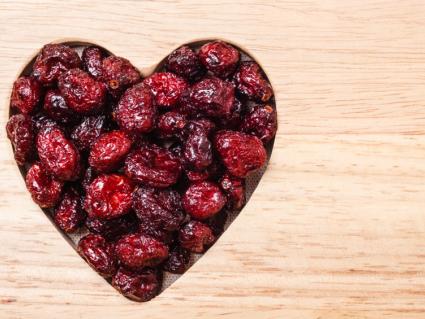
Wu wei zi, also know as schisandra berry, helps nourish many aspects of our being.
Wu wei zi is one of the most important Chinese herbs used in therapeutic formulas. The translation into English is: five (wu) flavor (wei) seed/berry (zi). Known as schisandra berry, this wonderful fruit contains all flavors (sour, sweet, bitter, salty and acrid) which lend to its ability to affect the body in numerous ways.
According to Chinese medicine, schisandra berry is used to astringe the lung qi and nourish the kidneys. In other words it is used for ailments such as chronic cough, asthma, and incontinence. Its astringent aspect also applies in certain cases of diarrhea where there is spleen and kidney yang deficiency, or a lack of energy to boost the function of the spleen and the kidneys. Additionally, schisandra is used to stop excessive sweating from yin or yang deficiency. When there is yin deficiency there may be sweating related to hot flashes. When there is a yang deficiency there may be sweating related to a lack of energy (qi) circulation.
Interestingly, schisandra also has a function on the psychological aspect of the heart. This is called calming the spirit. Symptoms such as palpitations, insomnia, forgetfulness, excessive dreams or neurosis are a result of an unsettled mind. This can stir up emotions causing the above mentioned symptoms. In essence schisandra berry consolidates and settles many aspects of our being.
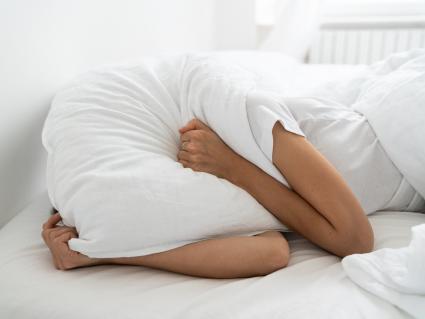
Your Sleep Positions Could be Causing Your Pain - Part 1
Would you believe that a good night’s sleep can make you hurt the next day? Or make your chronic pain worse? It can. I see many people who wake up in more pain than when they went to sleep. There are a number of ways that your sleeping positions and habits can make you sore the next morning, or even make existing problems worse.
Here’s what can happen and what you can do to prevent it.
First, if you fall asleep tense, you’re going to wake up tense and often sore. Your body can’t let go of all that tension when you sleep. I recommend trying some progressive relaxation as you fall asleep. Start with your scalp (yes you do have muscles there) and relax the muscles there. Progress all the way down your body, spending a few minutes with each area. This really can make a huge difference in the way you feel when you wake up, and can also help you fall sleep faster as a bonus.
There are drawbacks to every sleeping position, so being aware of them can help you make adjustments. No one position is better – it’s all individual.
Sleeping on your stomach is very hard on your neck and shoulder muscles because your head has to be turned on its side. I recommend doing that as seldom as possible.
Sleeping on your side has some issues too. First, try not to curl your spine into the “fetal position”. Bending your legs up is fine but aim to keep the spine relatively straight and relaxed-that includes your neck. Next, look at how you hold your hands when you sleep when you’re sleeping on your side. If your hands are all curled up under your chin night after night you’re going to end up with pain from them eventually, or it will make existing pain worse. See how your knees and ankles line up – you may find that one knee pressing on the other can cause stress or pain in the knee joint. Same for your ankles. Your hips are wider than your knees so using a pillow under the top knee or between the knees can help prevent or ease knee, hip, and even back pain.
The major issue with lying flat on your back is that it can exacerbate low back pain. If that’s the case try sleeping with a pillow or soft bolster under your knees.
And, lastly, but importantly, is the subject of your pillows. The wrong pillow can cause neck pain and headaches. Big fat firm pillows are the main culprit. Soft thinner pillows are much better – especially the ones that can be scrunched up as needed. When you’re on your back, a soft pillow that can be scrunched to support the curve in your neck and yet be almost flat under your head, which is ideal. This keeps your neck and head aligned with the rest of your body. On your side you need more thickness to protect your bottom shoulder from collapsing too much. Again, stuff more of the pillow under your neck for that neck support. If you move around a lot as you sleep, the soft scrunchy pillows can easily be adjusted to any position. If you need the height of a big pillow for digestive or breathing issues, consider a foam incline that you can just put on the bed under the sheet and using just the one pillow as described above.
If you’re waking up with pain every morning it could be how you’re sleeping. See if any of these suggestions help. I’ve eased my own neck, shoulder, wrist and knee pain using these strategies. You can too. Let me know how it goes, perhaps I can make an individualized suggestion for you.
Yummy Cabbage Soup for Cold & Flu
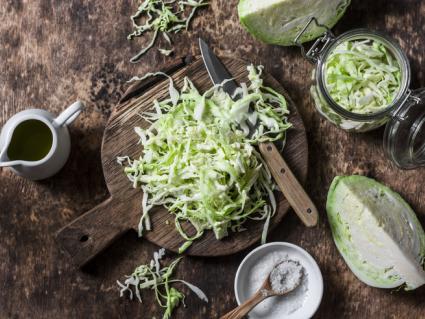
Finding something to eat when you have a cold or the flu can be a challenge. Read on for a recipe I like to make when someone feels ill in my household.
Yummy Cabbage Soup Recipe: To Fight Cold & Flu
1/3 to 1/2 head of green cabbage coarsely chopped
1 tablespoon minced fresh ginger
3 large or 4-5 small garlic cloves, coarsely chopped
1/2 large onion, diced
3-4 pieces of astragalus**
2 quarts low sodium chicken broth
2 stalks of fresh scallions, chopped
salt and pepper to taste
1-2 tblsp olive oil
Combine ginger, garlic, onion, olive oil and saute for 3-5 minutes on medium low.
Add cabbage and saute for another 5 minutes, stirring on occasion. Add chicken broth and bring to boil, then quickly bring down to low simmer. Cook for 20 minutes on a light simmer. Add huang qi and simmer for 15 minutes. Remove astragalus.** Add scallions for the last 5 minutes. Salt and pepper to taste.
Cabbage is a member of the brassica family of vegetables. Known for their immune boosting components that benefit the gut flora to strengthen the immune system, brassicas also tote powerful anticancer .
Garlic and onion in this recipe contain antimicrobial effects to combat pathogens that cause colds and flus. The fresh green onion or scallion has an aromatic nature which instantly clears phlegm from the sinuses. The scallion can even be chewed raw to enhance it’s influence on dissipating mucous.
Ginger, along with cabbage both positively influence a sour stomach, and both aid in the processing of nutrients from food.
The addition of astragalus, known as huang qi in Chinese medicine, creates another avenue of immune boosting. In Chinese medical theory, astragalus tonifies the wei qi, also known as protective qi, or the immune system. **This herb is used to help prevent infection and should be added only for those who are not yet in the depths of the flu/bad cold.
Chicken broth classically promotes a healthy appetite and rounds out the overall effects of the dish in this immune boosting and very deliciously simple soup.
Zusanli “Three Mile Leg Acupuncture Point
One of the most often used acupuncture points to strengthen overall vitality is the 36th point on the stomach channel: Zusanli.
One of the most often used acupuncture points to strengthen overall vitality is the 36th point on the
stomach channel: Zusanli.
This point is traditionally either needled or stimulated with moxa - similar to an incense
stick, the moxa stick's glowing ember is used to warm the point for 5-15
minutes on each side. When needled or warmed with a moxa stick, the point is
powerful and effective. The "three mile" name comes from the very
old practice of using moxa on the point to get three more miles of marching out
of soldiers.
The point helps ease digestive complaints, boosts immune function, and is very effective for
reducing fatigue. For digestive discomfort, pressure at the point will work. In
children, I will often teach parents how to moxa the point at home, and have
seen the incidents of colds and asthma-related complaints drop substantially.
Author: Chris Reilly, LAC