Herbal Support For Lyme Disease
Lyme disease a bacterial infection caused by Borrelia Burgdorgeri and in late stages, it can be difficult to treat. There is evidence that the Borrelia bacteria persists in tissues and can shift its form or shape in unfavorable host conditions, including a round body or cyst shap1.Different types of antibiotics and herbs have been studied to find the most effective agent that can kill or eradicate all forms of the bacteria. In subculture studies, single antibiotic agents are often found to be ineffective at eradicating all forms of the bacteria, therefore, multiple agents may be used in order to increase effectiveness of therapy.
In a study published in 2020, a variety of herbs and antibiotics were studied for their effectiveness at killing all shapes of lyme bacteria in cultures. An herb native to W. Africa, Cryptolepis Sanguinolenta, was the only agent found to eradicate all forms of the Lyme bacteria. As the authors concluded, “only 1% Cryptolepis S. extract caused complete eradication,” as after 21 days in subculture no spirochetes were visible2 (Feng et al., 2020). The authors found that Cryptolepis was highly effective at eradicating both growing and non-growing stationary phases of Borellia bacteria.
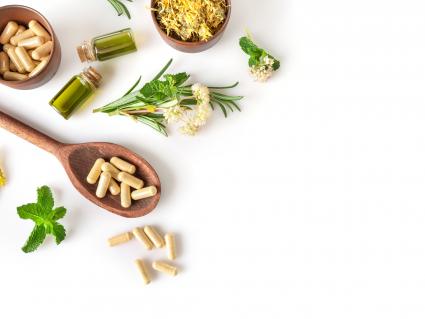
As an herb, Cryptolepis has many mechanisms of action. In a review written on Cryptolepis the main active constituent cryptolepine was found to have anti-inflammatory properties as well as anti-microbial properties against many different types of microorganisms3. The use of other herbs have also been shown to have anti-microbial properties as well as anti-oxidant, anti-inflammatory and immune stimulating properties. These include Oregano, Japanese Knotweed, and Cat’s Claw. In herbal medicine, combining multiple herbs can have a synergistic effect which may increase overall effectiveness.
Herbal therapies can have interactions with medications and some are contraindicated during pregnancy. Some may also have mild side effects. Therefore it is highly recommended that for proper dosing and precautions, you should consult with a provider who is familiar with herbal therapies and their possible interactions with medications. If you are interested in starting an herbal therapy, please call the Stram Center today as all our providers are trained in the use of natural and herbal therapies.
References
1. Persisting atypical and cystic forms of Borrelia burgdorferi and local inflammation in Lyme neuroborreliosis.
Miklossy J, Kasas S, Zurn AD, McCall S, Yu S, McGeer PL.
J Neuroinflammation. 2008 Sep 25
2. Feng J, Leone J, Schweig S, Zhang Y. Evaluation of Natural and Botanical Medicines for Activity Against Growing and Non-growing Forms of B. burgdorferi. Front Med (Lausanne). 2020 Feb 21;7:6. doi: 10.3389/fmed.2020.00006. PMID: 32154254; PMCID: PMC7050641.
3. Newman Osafo, Kwesi Boadu Mensah, Oduro Kofi Yeboah, "Phytochemical and Pharmacological Review of Cryptolepis sanguinolenta (Lindl.) Schlechter", Advances in Pharmacological and Pharmaceutical Sciences, vol. 2017, Article ID 3026370, 13 pages, 2017. https://doi.org/10.1155/2017/3026370
Herbal Support For Lyme Disease Related Blog Posts

Herbal Support For Lyme Disease Related Services
Naturopathic Medicine
Much like a general practitioner, a naturopathic doctor manages a broad range of health conditions affecting all people of all ages. However, naturopathic medicine is a distinct system of primary health care, distinguished by the healing principles upon which its practice is based.Naturopathic Medicine
Lyme Disease
Lyme Disease Diagnosis and Treatment in Delmar NY and Burlington VT offices At the Stram Center we vow to continue our education on Lyme Disease research, stay up to date on the most effective testing and all the safe available therapies. Moreover, our years of experience in treating patients according to the whole person-integrative medicine approach allows us the most effective way to care…Lyme Disease
Chinese Herbal Medicine
Desiring a healthier life may be your goal, but for you and millions others it can prove more challenging. You may feel that your immunity is low. You may be in a state of physiological, mental or emotional unrest. Or you may be faced with a more serious illness or chronic pain.Chinese Herbal Medicine
Herbal Therapies Can Help Fight Lyme
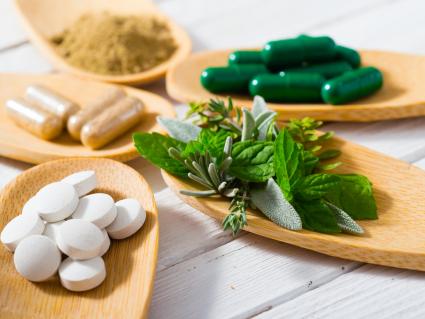
Using herbal therapies in conjunction with antibiotics can help fight lyme more effectively.
Lyme disease is a complex infection involving the spirochetal bacteria species Borrelia burgdorgeri sensu stricto. Treatment for Lyme disease with standard antibiotic therapy is successful for many if caught early. But for some, there continues to be a persistence of symptoms after treatment which is currently being referred to as PTLDS (Post-Treatment Lyme disease Syndrome) (reblan, et al., 2017). Yet there is a substantial amount of evidence mounting that the Borrelia bacteria persists in tissues and can shift morphological forms in unfavorable host conditions (miklossy, et al., 2008). These forms include a round body or cyst form as well as biofilm colonies.
The challenge of antibiotic therapies is that they often do not address all forms of the bacteria. Antibiotic therapies can be powerful, but they are also designed to be very specific. Imagine a battle with many different types of enemies and armament to fight, yet the only thing you bring to the battle are snipers with rifles meant to take out very specific targets. For Borrelia bacteria we must not only target spirochetes, but we must also target cysts and biofilms.
This is how herbal therapies in conjunction with antibiotics may provide increased effectiveness over antibiotics alone. It is like bringing the the entire military to the fight, rather than only snipers. There are many studies that have investigated the killing properties of natural agents against the different morphological forms of Borrelia. In a study by Feng et al. using 34 different natural agents and 3 different antibiotics, they found that one of the active constituents in oregano, carvacrol, had very high activity against cysts AND biofilms (Feng, et al., 2017).
In another study using culture and sensitivities, it was found that the common natural sweetener, Stevia, had excellent activity against ALL morphological forms of Borrelia bacteria, including biofilms and, it was even more effective than antibiotics (Theophilus, et al., 2015).
These studies are in vitro studies, meaning that they are done outside of animals. More studies need to be done on the dosing, toxicity, and effectiveness of these agents in animals. But for hundreds of years before the advent of antibiotic medications, herbs were used as medicine. Using herbs medicinally in conjunction with modern antibiotics can help to improve overall effectiveness of treatment against Borrelia bacteria.
References
Miklossy J, Kasas S, Zurn AD, McCall S, Yu S, McGeer PL.
J Neuroinflammation. 2008 Sep 25;5:40. doi: 10.1186/1742-2094-5-40.
2. ORIGINAL RESEARCH ARTICLE
Front. Med., 14 December 2017 | https://doi.org/10.3389/fmed.2017.00224
The Clinical, Symptom, and Quality-of-Life Characterization of a Well-Defined Group of Patients with Posttreatment Lyme Disease Syndrome
Alison W. Rebman1, Kathleen T. Bechtold2, Ting Yang1, Erica A. Mihm1, Mark J. Soloski1, Cheryl B. Novak1 and John N. Aucott1*
3. Front Med (Lausanne). 2017; 4: 169.
Published online 2017 Oct 11
Selective Essential Oils from Spice or Culinary Herbs Have High Activity against Stationary Phase and Biofilm Borrelia burgdorferi
Jie Feng,1 Shuo Zhang,1 Wanliang Shi,1 Nevena Zubcevik,2 Judith Miklossy,3 and Ying Zhang1,*
Author information Article notes Copyright and License information Disclaimer
4. Eur J Microbiol Immunol (Bp). 2015 Nov 12;5(4):268-80. doi: 10.1556/1886.2015.00031. eCollection 2015 Dec.
Effectiveness of Stevia Rebaudiana Whole Leaf Extract Against the Various Morphological Forms of Borrelia Burgdorferi in Vitro.
Theophilus PA1, Victoria MJ1, Socarras KM1, Filush KR1, Gupta K1, Luecke DF1, Sapi E1.
How Chinese Medicine Helped My Mother After Her Traumatic Brain Injury
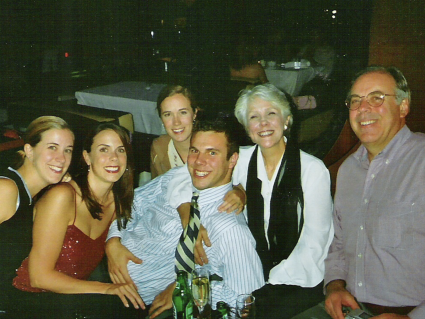
This is a very personal blog post for me as my mother has been living with a traumatic brain injury for 10 years and what I’d like to share is how I used Chinese medicine in her recovery even in her earliest days after the accident. In April of 2011, I was living in Portland, Oregon at the time but visiting my brother in Missoula, Montana. Our dad called and said our mom fell down a set of stairs and had been life-flighted to the nearest trauma hospital in Cleveland Ohio. My brother and I were on a flight the next day, as well as my two sisters who were in other states. My mom had fractured her skull in several places including some of the bones of her ear and there was severe damage including bleeding and swelling to both frontal lobes of her brain. She was in the ICU on and off for about 2 weeks and in the hospital for a total 5 weeks. During that time, we all took turns visiting and I packed up my life in Portland and moved back to my childhood home to be the primary caregiver for my mom as well as help manage the household.
Immediately following the accident, she was....
minimally responsive. She recognized us, smiled, and said our names but was only saying one to three words at a time. She had fine motor movements of her hands, her neck and upper back muscles were in a hypertonic state (abnormally high muscle tone) and well as her arms and legs which were moving a lot. On day 6, she was unresponsive with eyes closed all day. Bloodwork found low sodium levels. I tried giving her acupressure using ear seeds (tiny seeds on tiny stickers) on several different points to try to get things moving, she felt some of them by moving that body part, but there was no change otherwise in her responsiveness. As the end of visiting hours were approaching and she’d been sleeping for about 24 hours, I began giving her acupressure at a point between the nose and upper lip, actually using my nail to apply more pressure than just my fingertip could. This point, named Ren Zhong (translated as ‘man’s middle,’) and delineated by acupuncturists as Governing Vessel or GV 26, is used to revive consciousness for coma or sudden loss of consciousness, among other actions and indications. She began moving her head back and forth and then came to, she opened one eye for the first time all day and looked at all of us while we spoke to her. We were able to say good night and that we loved her. Her eye welled up and a few tears dropped. She kept looking at us but didn’t say anything, then went back to sleep.
At that point, I had only been in practice one year and had already seen and assisted in some amazing healing and recoveries in the teaching clinic and in the first clinic where I worked as a licensed practitioner, but being able to revive my mom and allow our family to have some relief that night was one of the most powerful moments in my now 11 years of practice. I continued to give my mom acupuncture while I cared for her the summer I was home, but was more so caught up in bringing her to multiple appointments every week including physical and occupational therapy and other appointments with doctors, providing nourishing meals three times a day, and making sure she was taking some key supplements and Chinese herbs to help her brain and overall stamina. When she was hospitalized, we brought all her food and didn’t allow her to eat the hospital food provided, she wasn’t too keen on that food anyway, and I know this contributed to her recovery as well as having a family loving her back to health. Even early on, doctors said that given her injuries, her recovery was remarkable.
With any traumatic brain injury, a different version of the person will emerge, there will be some of the same and some new aspects of the person and an understanding of what part of the brain was affected and what that part controls will help in understanding this new version. At any stage of a TBI, Chinese medicine can be used on the path to recovery- including acupuncture, herbs, body work, nutrition and Qigong meditation- as it is important to keep nourishing the brain. This can be done from a deep level using Chinese medicine that takes into account the entirety of the person including the intelligence, memory, thinking and consciousness as well as the functioning and execution of other organs intricately connected with the brain.
How Chinese Medicine Helped My Mother After Her Traumatic Brain Injury Related Blog Posts


How Chinese Medicine Helped My Mother After Her Traumatic Brain Injury Related Services

Acupuncture
Did you know that acupuncture has been shown to be more effective than conventional treatment for migraines, back and knee pain? Acupuncture is also the complementary therapy most recommended by medical doctors (M.D.'s), and is covered under more insurance plans than ever before. No other traditional healing method has ever earned as much world-wide success, recognition and support! Acupuncture…Acupuncture
Chinese Herbal Medicine
Desiring a healthier life may be your goal, but for you and millions others it can prove more challenging. You may feel that your immunity is low. You may be in a state of physiological, mental or emotional unrest. Or you may be faced with a more serious illness or chronic pain.Chinese Herbal Medicine
How Dangerous is Acetaminophen?
Acetaminophen, the active ingredient in Tylenol and many cold and flu medications, has come under fire recently by the FDA.
It has been known for many years that acetaminophen can damage the liver at high levels, but what most people are not aware of is that these levels are just 4,000mg per day. With extra strength Tylenol doses being 500mg each, this is only eight Tylenol per day. Acetaminophen is also in cold and flu meds such as NyQuil and Theraflu, so if combined with Tylenol, it is easy to lose track of the dosing. Also, if combined with alcohol or for habitual drinkers, say two glasses of red wine per night, the toxicity to the liver increases.
Acetaminophen overdose leading to acute liver failure is becoming more frequent. According to an FDA memo, 110,000 visits to the emergency room were related to acetaminophen, as well as several hundred cases of acute liver failure. Acetaminophen is also the number one reason people need liver transplants for acute liver failure, says Ronald Busuttil, chairman of surgery and chief of liver transplantation at UCLA Medical Center.
The FDA is proposing stricter and clearer labeling, and possibly coming with a black-box warning. They are also proposing to lower the maximum daily dosage of acetaminophen, and looking to remove acetaminophen from some prescription drugs such as Vicodin.
So what are our options for pain relievers?
Many people choose acetaminophen- containing products because they do not have the same gastrointestinal side effects as ibuprofen or naproxen. But acetaminophen is also not directly anti-inflammatory, but acts on our brain to reduce the sensation of pain. As a Naturopathic Doctor, I look to use a more holistic approach to pain management. There are many natural herbs, enzymes, and nutrients that are naturally anti-inflammatory, and best of all, with no side effects! Together with dietary modifications and the use of acupuncture, you can potentially be pain free without the use of toxic pain medications.
How do we Approach Weight Loss?

For many individuals, feeling the best is feeling comfortable in their own skin. Most adults struggle with obesity and being overweight and for many this is one of the biggest barriers to feeling well. Our approach to weight loss at the Stram Center is one that goes against the diet industry.
We aim for people to lose weight in a sustainable way that improves their overall health allows them to maintain results.
Part of weight loss is often making sure that there are not other confounding factors that must be addressed first in order to foster weight loss. The body naturally holds onto weight (or gains weight) if it is in a state of extreme stress, if there are active or chronic infections, or if there are hormonal imbalances. In this way, sometimes our weight loss journey begins with addressing these critical issues first. In our experience, this makes for much easier and successful weight loss because the body feels “safe” to release unnecessary excess weight.
We aim for people to lose weight in a sustainable way that improves their overall health allows them to maintain results.
Part of weight loss is often making sure that there are not other confounding factors that must be addressed first in order to foster weight loss. The body naturally holds onto weight (or gains weight) if it is in a state of extreme stress, if there are active or chronic infections, or if there are hormonal imbalances. In this way, sometimes our weight loss journey begins with addressing these critical issues first. In our experience, this makes for much easier and successful weight loss because the body feels “safe” to release unnecessary excess weight.
Why do we discourage losing weight too fast?
Our fat cells contain toxins that our body has stored to protect us. When we lose weight, fat cells shrink, releasing these toxins they have kept out of systemic circulation. If we lose too much weight too fast, our body cannot keep up with detoxification and we can feel very poor as a result. Before and during the weight loss journey it is important to support and improve detoxification, making sure detox pathways are operating properly.
Additionally, fast weight loss results in an unwanted reduction in muscle mass. Muscle mass is critical to overall metabolic health and we want to retain muscle as we lose fat. For these reasons, working with a registered dietitian to develop a nutrition plan to maintain muscle mass is very important.
What are the weight loss tools/therapies we use at the Stram Center? All weight loss tools used are in combination with one on one nutrition counseling, for optimal outcomes:
· Fasting – specific recommendations given for men, for pre- and post-menopausal women
· Specific diet therapies, personalized to meet individual needs
· Prolon fast-mimicking diet*
· Detoxes, including supplementation, diet therapies, and IV therapies
· Olympia Two month system with injections*
· IV therapies and injectables
* call for more information on these specialized weight management therapy programs; ask to schedule a free 15 minute consultation with our nutritionist dietitican. 518.689 2244, option 2.
How do we Approach Weight Loss? Related Blog Posts
How do we Approach Weight Loss? Related Services
Nutritional Counseling
The practitioners at the Center recognize that diet is often the basis for your heath and your potential to heal. Adopting a healthy diet is often the first step towards correcting health problems. Many medical conditions can be treated more effectively when the patient implements specific diets and uses nutritional supplements. These interventions afford fewer complications and side effects than…Nutritional Counseling

Women’s Health
Our reproductive health and fertility are a part, expression and source of our overall health. At The Stram Center we maintain that a broader understanding of the individual is just as essential as a focused examination of the reproductive system and it’s functioning within that person. Our integrative approach to women’s health provides holistic, balanced and effective care to achieve…Women’s Health
How Harmonizing May Help Your Allergies
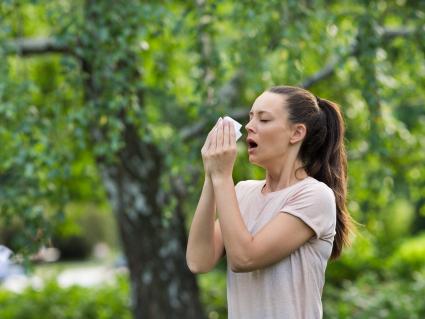
Chinese medicine for allergy relief.
Acupuncture and Chinese herbs are quite effective at addressing and resolving allergies. According to traditional practices, it is best to begin treating allergies in the opposite season, so for spring allergies, it is recommended to start treating in the fall, or at least, the winter. It is possible to address symptoms as they arise, but the goal is to prevent them from occurring in the first place. According to Traditional Chinese Medicine or TCM, diagnosis is made based on underlying patterns of disharmony. Seasonal allergies are often due to any combination of what we call Lung, Spleen or Kidney deficiencies as well as the influence of wind as an external pathogenic factor which can contribute to headache, sneezing, sore throat, runny or stuffy nose and more.
One point I almost always use when nasal symptoms are present is large intestine 20, named Ying Xiang, or ‘welcome fragrance.’ As you can see by the name alone, this point helps to open the nose for stuffiness and/or loss of smell. It is said to be the “foremost local point for treating all disorders of the nose.” It is located in the naso-labial groove just outside the nostrils. Although facial points may seem scary, I assure you the effect is immediate and the needles are extremely thin. Herbs can be used in conjunction with acupuncture for full relief. There are formulas that are like the herbal equivalent of medications like Sudafed and Claritin that also support the immune system.
With preventative and seasonal treatment of allergies, you no long need to fear the regrowth of all the beautiful trees, plants, and flowers in the spring!
Sources:
A Manual of Acupuncture by Peter Deadman & Mazin Al-Khafaji with Kevin Baker.
How Hyperbaric Oxygen Therapy Reduces Chronic Inflammation and Pain

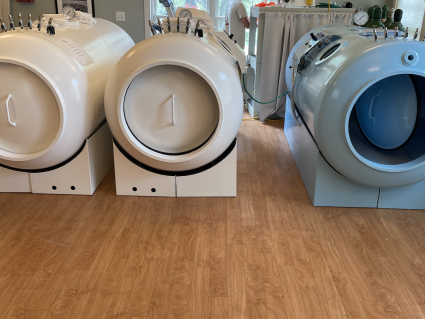
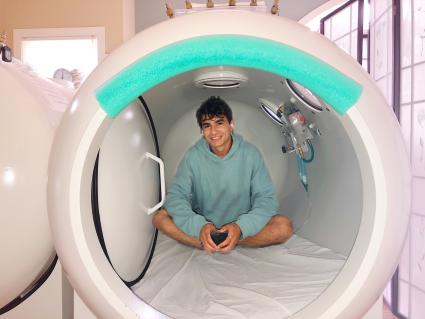
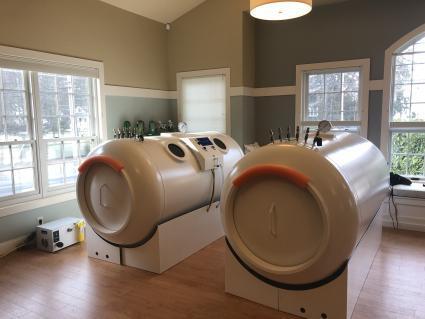
Hyperbaric oxygen therapy (HBOT) is a treatment that provides high amounts of oxygen to cellular tissue. Due to certain laws of chemistry and physics, the pressure is what differentiates this therapy from standard oxygen therapy using an oxygen tank or concentrator. Under pressure, oxygen gas is compressed into smaller molecules (Boyle’s Law) allowing concentrated amounts of oxygen to dissolve in liquid plasma. This high concentration of oxygen then travels to low areas of oxygen in the tissues (Henry’s Law).
Studies have investigated the effects of hypoxia, or low oxygen, in high altitude environments1. At hight altitude there is lower available oxygen in the air. The lower the oxygen levels, the more susceptible cells are to inflammation. The mechanisms are complex, but what has been discovered is that there is a protein called Hypoxia-Inducible Factor, or HIF. Low oxygen levels can be caused by injury to tissue, infection, sleep apnea, or high altitude. The HIF protein is sensitive to oxygen levels and when oxygen is low, it stimulates production of another protein called NF-kappaB. This protein is responsible for stimulating many cytokines responsible for inflammation. The opposite occurs when there is more oxygen in the area, HIF protein gets shut down and therefore cannot stimulate NF-kappaB thereby decreasing inflammation.
Multiple HBOT studies have shown that HBOT therapy decreases inflammatory markers such as c-reactive protein (CRP) and sedimentation rate (ESR). In December of 2021, the Journal of Clinical Rheumatology published a finding that rheumatoid arthritis patients who received 30 treatments over 6-10 weeks had significant improvements in pain levels and lower CRP and ESR levels2.
In another study conducted on 32 patients with fibromyalgia who underwent 20 HBOT sessions 3 days per week, there were significant improvements in symptoms of anxiety, fatigue, and pain compared to baseline3.
Multiple studies have also investigated the effects of HBOT on traumatic brain injury and chronic traumatic encephalopathy4. Both are conditions of inflammation in the brain. In the largest study performed on patients suffering from chronic neurocognitive damage due to TBI, it was found that HBOT therapy was associated with significant cognitive improvements. 154 patients underwent 40-70 one hour sessions 5 days per week under 1.5-2.0 ATM. CT scans showed increased activity in the anterior cingulate and the post-central cortex, in the prefrontal areas and in the temporal areas of the brain along with the cognitive improvements5.
Many conventional therapies treat inflammation with medications that intend to block inflammatory cytokines but this does not always lead to resolution of inflammation and pain. It is clear that low oxygen levels cause inflammation. It then makes sense that high oxygen levels would decrease inflammation. Many published studies investigating inflammation, inflammatory conditions, and HBOT have already begun shown this relationship.
Illustration of mechanism of hyperbaric oxygen therapy affect on inflammatory cytokines4
Chronic inflammatory diseases associated with NF-κB activation
|
NF-κB activation in human inflammatory diseases |
|
Rheumatoid arthritis |
|
Atherosclerosis |
|
Chronic obstructive pulmonary disease (COPD) |
|
Asthma |
|
Multiple sclerosis |
|
Inflammatory bowel disease (IBD) |
|
Ulcerative colitis |
Adapted from Tak and Firestein 2001.
- Hypoxia and Inflammation: Insights From High-Altitude Physiology
Kathy Pham
https://www.frontiersin.org/ar...
2. J Clin Rheumatology
. 2021 Dec 1;27(8):e462-e468.
The Effects of Hyperbaric Oxygen on Rheumatoid Arthritis: A Pilot Study
Michelle T Sit et al
https://pubmed.ncbi.nlm.nih.go...
3. Clin Exp Rheumatol
action
Jan-Feb 2019;37 Suppl 116(1):63-69. Epub 2019 Feb 6.
Hyperbaric oxygen treatment of fibromyalgia: a prospective observational clinical study
Fabiola Atzeni et al
https://pubmed.ncbi.nlm.nih.gov/30747099/
4.
Med Gas Res. 2016 Apr-Jun; 6(2): 102–110.
Published online 2016 Jul 11. doi: 10.4103/2045-9912.184720
Hyperbaric oxygen therapy for traumatic brain injury: bench-to-bedside
5. Neurology Research
Effect of hyperbaric oxygen therapy on chronic neurocognitive deficits of post-traumatic brain injury patients: retrospective analysis
Amir Hadanny et al
About Korey DiRoma,, N.D.How Hyperbaric Oxygen Therapy Reduces Chronic Inflammation and Pain Related Blog Posts
How Hyperbaric Oxygen Therapy Reduces Chronic Inflammation and Pain Related Services
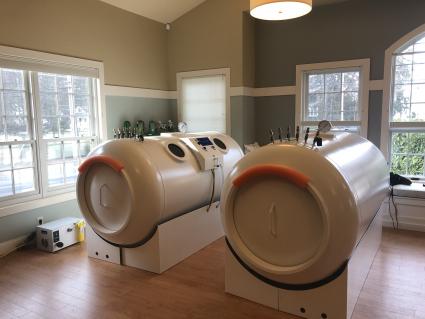
Hyperbaric Oxygen Therapy
Dedicated to treating the root cause of illness and using the most advanced integrative methods in a safe environment, the Stram Center for Integrative Medicine, under the medical supervision of Dr. Ron Stram, will utilize the benefits of hyperbaric oxygen therapy (HBOT) to complement and enhance the healing process in both chronic and acute conditions of our patients. You will…Hyperbaric Oxygen Therapy
How Meditation is good for you!
A recent Men's Health Magazine article. Join us every Wednesday evening at 7:30 PM.
How to Avoid Overeating during the Holidays!
While the holidays are a great time to celebrate with family and friends, celebrations often result in overeating and excessive calorie intake.
Below are tips to prevent overeating.
- Listen to your body: It takes 20 minutes for your digestive system to inform the brain that you are full. Before having seconds or dessert, ensure it has been at least 20 minutes since you started eating.
- Take a break: Take a break from eating during your meal by having a drink of water, or talking with your company. This will help your meal last at least 20 minutes.
- Drink water with your meal: Water is calorie free and helps aid digestion. Choose water over other beverages to avoid excess calorie intake.
- Graze during the day: Eat small meals and snacks leading up to the holiday meal. Avoid skipping meals all day to save room for the feast. Eating more often will increase your metabolism and put less stress on your digestive system.
- Drink hot liquids during or after your meal: Hot liquids tend to help speed up digestion. Drink hot herbal/decaf tea or hot water with your meals to aid digestion. Avoid drinking caffeine in excess such as coffee.
- Wait for dessert: Instead of having dessert with the meal, wait and have dessert 1-2 hours after the meal. This will put less stress on your GI tract.
How to Balance Flavors During Winter
Adding bitter foods to your diet during winter may help preserve joy!
The Chinese Materia Medica uses herbs within categories to describe their "nature". One such aspect is "flavor". The flavors are sweet, acrid, bitter, salty, and sour. Each herb has one or two flavors which correlate to an aspect of their use within herbal formulas.
As we ease into winter the air becomes cooler, the days darker. Winter’s natural affect on the body is centering and sinking in nature, therefore we need to focus on foods that promote these aspects. This, in turn, supports the body’s capacity to store energy.
The flavor associated with winter is salty. This flavor promotes concentration and is grounding to our mental capacities. Though we require salt, the addition of salt to foods is best avoided. Instead turn to foods that are naturally salty (naturally contain sodium) such as, eggs, beets, turnips, chard, spinach, parsley, seafood, meats (sparingly or in moderation), and seaweeds.
Balance is key. Just like a well-spiced dish that is neither too salty nor too spicy for example, balance in day-to-day eating will support your vitality. Because winter is "sinking" in nature, supporting the opposite, as Paul Pitchford writes, “preserving joy in the heart,” is necessary.
Bitter is the flavor associated with the heart. Foods with this flavor are known to "enter the heart". The heart is related to the mind, therefore consuming foods that contain a bitter flavor will promote a happy heart, which is of much use during the long, cold winters.
This winter, try adding joy-preserving "bitter" foods to your diet: watercress, lettuce, celery, turnips, endive, asparagus, alfalfa, carrot greens, rye, oats, quinoa, amaranth and herbs: chaparral, chicory root, burdock root and horsetail.