Point of the Month: Transforming Food to Nutrients with Acupressure

Acupressure tips to help promote healthy transformation of food into nutrients.
As many of us know from experience, eating the right food is not always a guarantee of healthy nutrient levels in the body. Once we swallow our food, a lot has to happen before our cells are provided with essential vitamins, amino acids and carbohydrates. The body has to transform that food from foreign substance, to human sustenance.
This process is the job of the earth "element" in acupuncture. That refers to earth as in soil, not planet earth. Soil takes fallen leaves, animal remains and waste, rain and many other factors into itself, and they are transformed there into nutrients that will feed the next season's growth. It is a fine metaphor for what our digestion does within our bodies.
To promote the healthy transformation of food into nutrients, try this acupressure approach. You will need to know two points: the 12th and 6th points of the Ren channel. Ren 12 is located in the center line of the abdomen halfway between the belly button and the lower edge of the breast bone. Ren 6 is also along the center line about two inches below the belly button.
Calm your mind. Engage with thoughts and feelings of gratitude for all the work your body does, and that you are now taking the time to support your whole being. Warm your palms by rubbing them together, then put your right palm over Ren 12, and your left over Ren 6. Feel the warmth of your palms at each point, and let that spread inward to fill the G.I. tract with warmth and positive intention. Feel the warmth from you hand at Ren 12 moving to connect with the warmth of Ren 6 to form a continuous whole. Enjoy that for as long as you wish.
Next, gently move your hands in a clockwise direction beginning from the lower right side of your abdomen (at a level once again about 2 inches lower than the belly button), up towards the lower border of the rib cage, across to the left side lower border of the rib cage,to the lower left abdomen, and back to complete the circle on the right lower abdomen. Gently circle nine times, then return the palms to Ren 6. You can enjoy the warmth and connected feeling of the entire abdomen before opening your eyes to return to your day, or closing them to enjoy a nap!
Point of the Month: Transition and Acupuncture Zones

As we transition from summer to fall, we can reflect and center our mind and body.
To keep with the theme of transition, we will return to the point named Qi Hai "Sea of Qi." This point is located at about one and a half inches directly below the belly button, but connects to a zone which is the center of mass in the lower abdomen known as the Dan Tian, "field of the elixir." Qi Hai is the point on the surface of the body. Dan Tian is the zone at the level of Qi Hai below the navel, but in the center of the body, not at the surface. When meditation instructors say to breathe to your lower abdomen, this is the area they are referring to.
Consider how when you look at time-elapsed photography of a night sky, you can see the circular rotation of the stars from our perspective (it is the earth's rotation that is responsible- like looking up at the stars while spinning on a very large merry-go-round). The photograph looks like many circles of light, smaller towards the center, and larger as they get further from the center- like luminescent grooves on a vinyl record. The star that is the most still at the center of this spiraling cosmic motion is called the Pole Star- which we know as Polaris in the North. Polaris came to have special meaning in traditional Chinese thought for this reason- it represents a symbol of the center around which movement and change can orient itself. The closest thing to a constant in a Universe of change.
For human beings, the concept of the center is the Dan Tian. Movement is life, and should be celebrated. The center is not to halt or deter the movement of life, but to give it a reference and an orientation. It may be helpful to think of it as the central note or melody with which a harmony and a beautiful song can come into being, rather than a disorderly clutter of noise.
Even transitions for the good can be difficult. For the theme of transition this month, keep in mind the concept of the organizing and stabilizing center. Rather than any one particular exercise, I will recommend exploring the Dan Tian with your inner eye as you breath to the lower abdomen. Putting one or both hands over Ren 6 can help hold the attention there. Find your Polaris (spoiler alert: it's inside you, not up in the sky), and while you sit in the still light of your Pole star, slowly open your awareness to the symphony of life in constant transition all around you. When it feels like it's time for the meditation to close, end as you began at the center of the Dan Tian.
Points of the Ear: Gateway to the Body

The ear is essentially an acupuncturists dream!
The ear has an acupuncture point for just about everything. There are points used by the military for pain relief and PTSD, there are points used for addiction management at treatment centers across the country, and there are points used for everything from appetite control to elbow pain. Instead of massaging one acupoint in the ear, try all of them! This can be done by yourself or someone you know.
Wash your hands thoroughly, and avoid putting pressure over or in the ear canal. Take about five minutes in a quiet area to massage the entire body of the outer ear. Start from the ear lobe and work your way up to the top of the ear, then work your way back down to the ear lobe. Pressure should be gentle and comfortable, motion should be slow and smooth. This technique helps promote a sense of wholeness and connection throughout the body and mind, and can be a very calming way to wind down at the end of a busy day.
Polycystic Ovarian Syndrome (PCOS) Can be Treated with Chinese Medicine
In my practice I have worked with a number of patients who have this diagnosis and are trying to conceive. I chose to write about this topic because it’s a very common condition; and one which can be positively affected by Chinese medicine.
The prevalence of PCOS (Polycystic Ovarian Syndrome) is estimated at about 5%-10% of women who are seeking treatments for infertility. This may be a small representation of the estimated 20% of the population actually effected by the disease.
In Chinese medical theory PCOS is marked by a picture of “dampness.” This occurs when fluids in the body are ineffectively synthesized and accumulate to form cysts. As explained in western medicine, there is also a hyper-secretion of insulin and testosterone. This gives rise to abnormal follicular development also characterized by anovulatory cycles.
Acupuncture and Chinese herbs are beneficial to those with PCOS in the following ways:
1. Acupuncture and Chinese herbs can regulate the cycle.
2. Lifestyle changes based on concepts in Chinese medicine help manage weight and promote healthy eating habits. This is so important because 30% – 50% of obese women with PCOS develop diabetes.
3. Acupuncture and herbs are known clinically to improve egg quality.
In Chinese medicine we focus much of our treatment protocol on the lifestyle changes patient make. For PCOS, as mentioned above, diet is very important. Common foods to avoid are those that promote dampness; these are dairy (especially cheese), refined sugar, excessive sweets, and greasy foods. These will essentially promote weight gain and support the increase of excess insulin and testosterone in the body.
Posture and Your Heart Health

We are a forward society. We do many actions that involve reaching and leaning forward. We sit long hours looking at computer screens, bend forward to talk to our children, text on our phones, read and play games on our tablets and drive for long periods of time. Over time, these can cause slumped-forward posture: forward head, hands, and shoulders. Poor posture can negatively impact your heart health...
Forward Posture
A forward posture puts undue stress and tension on your body. For example, with repetitive forward activities, the muscles in the front of the chest get stuck in a shortened position, while the muscles in the back work overtime being pulled, stretched and weakened. When you are forward, the space in your thorax or chest area is decreased. If your diaphragm cannot expand and contract fully within that space, your cells, heart and other vital organs will not get optimal levels of oxygen. Forward posture can also cause pain, headaches and impingement of important structures.
What You Can Do
Increasing awareness, changing bad habits, regular stretching and massage can all positively impact your posture. Paying attention to how you are sitting and standing is a great first step. Try this: hunch forward and take a deep breath. Now sit up tall and take another deep breath. Feel the difference? Sitting tall provides space throughout your thoracic cavity which allows more oxygen to enter your bloodstream with each breath. More efficient breathing is better for your body, heart and health. Next, arrange your workspace. If your computer screen is too low, raise it using books or a stand so you are not looking down to see the screen. Search for stretches online for correcting rounded shoulder and forward head posture. Remember to sit tall when you work and drive.
Massage Health Benefits
Massage can also be a great tool. Myofascial release massage, in particular, can have a positive impact on posture and the cardiovascular system by releasing and opening restricted areas. While no massage therapist can touch the heart directly, they can address the tissue in the body that surrounds and supports the heart, creating a positive impact on veins, arteries, muscles and nerves. Massage also lowers stress levels. When blood flow is increased and blood pressure is reduced, the heart does not have to work as hard. Massage therapists can also point out posture weaknesses and suggest healthy ways to combat this prevalent problem in our society.
Posture and Your Heart Health Related Blog Posts
Posture and Your Heart Health Related Services

Medical Massage
Medical massage therapy identifies the massage therapist as having more medical training and focuses the sessions more specifically. Medical massage therapy can utilize a combination of manual medicine techniques as described below to optimize the effectiveness of this mode of treatment.Medical Massage
Practicing a Healthy Lifestyle to Help Manage Lyme
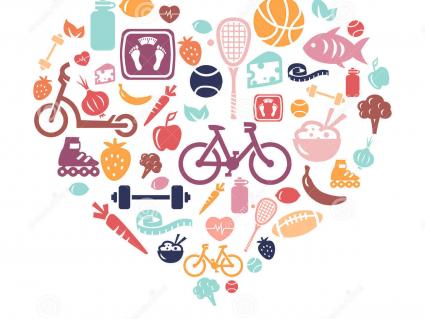
Managing the stress of Lyme with a healthy lifestyle: Diet, Exercise/Physical Activity, Sleep, and Stress Management.
Due to the potential immense stress a tick bite infection can cause on the body, the Stram Center believes it is essential to embrace a healthy lifestyle to help better manage your treatment plan and to promote optimal recovery. A healthy lifestyle can be defined in many ways, but the Stram Center feels it is important to optimize the following four areas: Diet, Exercise/ Physical Activity, Sleep, and Stress Management.
Inflammation is simply irritation in the body. If we have too much inflammation in the body, it can create an environment where Lyme Disease or other potential co-infections can thrive. What we eat can either fuel inflammation or help to put the inflammation out. For this reason many patients benefit from limiting and avoiding dairy products, refined grains, animal protein and poultry, and increasing intake of plant-based foods.
Equally as important as controlling inflammation is also focusing on promoting optimal blood sugar management. Blood sugar is the main fuel for our brain, organs, and muscles. What we eat directly impacts our immune system. If our blood sugar fluctuates rapidly during the day due to our diet, it can promote inflammation, weaken the immune system, and may actually intensify certain symptoms such as headache, fatigue, trouble concentrating, etc. For this reason, the Stram Center recommends optimal blood sugar management as part of managing lyme disease.
See the link below for a healthy, dairy-free, gluten-free, grain-free recipe that can be a great addition to any lunch or dinner.
Healthy Southwestern Quinoa Recipe
Prevention as a Model for Healthcare Reform
If you are reading this, you may have already embraced the concept of prevention as a model for healthcare reform since you find yourself on an Integrative Medicine website - prevention being the wholemark theory behind Integrative Medicine.
You are not alone. More than 40 billion dollars are spent out of pocket in this country by those seeking to prevent an illness or abort its progression through complementary care. At least half of all people between the ages of 35 and 55 have used at least one complementary service this year alone. This is just a small portion of the 2.5 trillion dollars that the nation spends each year on healthcare-nearly one fifth of the American economy. It is cleary a time for change and fast.
Hospitals, the American Medical Association, health insurance companies, pharmaceutical industries and our congressional leaders must all step up to the challenge and consider prevention as the necessary antidote for our healthcare ills. Why would prevention serve to be of such benefit? Simply put prevention is one step ahead of an illness both acute and chronic and can save enormous sums of money. Haven’t the insurance companies learned that they will pay much more for knee surgery and months of rehabilitation than they would for a series of effective acupuncture treatments? Haven’t they heard of the scientific benefits of such treatments?
My experience as an Emergeny Physician and Regional Administrator allows me to observe firsthand what can happen to a a person who has not lived a life with preventional care. It is mind boggling to find an emergency room visitor of young to middle age come in with an acute cardiac condition which will now force the healthcare system to spend thousands and thousands of dollars both acutely and long term to help control a disease that may have been prevented all together by such simple choices as eating habits, exercise and smoking cessation. We all need to become stewards of change. Write to your congressional leaders and ask them to be on the side of prevention as we develop our nation’s healthcare reform.
Protecting Your Body Against Viral Infection
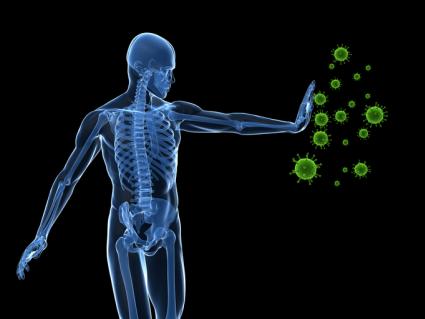
How viruses spread and survive and what you can do to protect yourself against them!
As a follow up to our recent discussion regarding the coronavirus pandemic, I would like to discuss some information regarding the immune system and its function and some natural ways to stimulate the immune system response.
How the Immune System Works
There are many parts to the immune system as it has many functions. For this discussion, I will focus primarily on the parts that are important for fighting and resolving viral infections.
Our immune system is divided into two broad categories called non-specific (innate) and specific (adaptive). There are mainly three non-specific parts of the immune system. First are anatomic barriers such as the skin, eyes (tears), respiratory tract and mouth (mucus, saliva). Second are white blood cells such as neutrophils, macrophages, and natural killer cells. And thirdly is an inflammatory response from cytokines which often are the source of symptoms such as fever, increased mucus, and pain. The specific immune response is responsible for creating cytotoxic T cells and antibodies from T and B lymphocytes, respectively.
Understanding Viruses
Viruses, unlike bacteria, CANNOT replicate on their own. They contain pieces of genetic material (DNA or RNA) and need to infect a host cell that does have replication capabilities. Viruses can be viable outside of a host cell for a short time, typically hours to days, but then become unviable. Therefore, in order to spread, the virus must travel from host to host. This is why is it extremely important to minimize contact with large groups of people at this time so that we can limit the spread of the virus. Coronavirus, like influenza, is an “enveloped” virus, meaning that it has an outer layer. This outer layer is susceptible to heat and detergents which is why hand washing and good cleaning techniques are important for killing the virus on surfaces.
How Our immune System Fights Viral Infection
Once the virus is in the host cell, that cell unknowingly starts to make more virus particles. This cell is now considered an “infected cell” and is labeled as such by the immune system. Specialized lymphocytes that are part of the non-specific immune response, called Natural Killer cells (NK cells), can take immediate action at identifying these infected cells in order to control viral replication. It is later that other parts of your specific immune system creates cytotoxic T cells and antibodies to specifically identify and target these viruses for removal. But it can take several weeks to start creating antibodies.
The influenza vaccine is given so that the immune system can start building antibodies prior to exposure of the virus. This gives an added “defense” if or when exposure occurs.
It is important then that we rely on the non-specific parts of our immune system to help fight this virus, since it takes several weeks to create antibodies. Barrier defenses such as hand washing, not touching your face, eyes, mouth, etc. are extremely important. And increasing the “first responders” against viruses, Natural Killer cells, can play an important role in fighting viral infections.
How We Can Boost our Immune System Function with Supplements
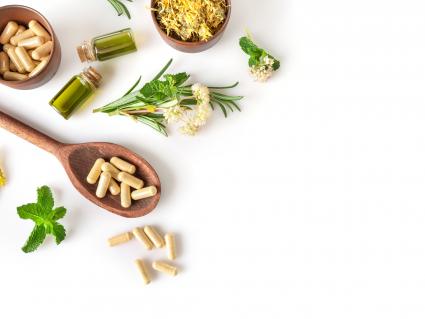
Here are some natural herbs and nutrients that increase NK cell activity and improve the immune system response to viruses. Many of the herbs contain specialized types of sugar compounds that stimulated NK cell production and activity. When taking herbs or supplements, it is important to discuss with your doctor potential side effects and/or interactions before starting a supplement regiment.
Astragalus
Astragalus contains polysaccharides that help to improve immune response. The polysaccharides stimulate lymphocyte production including NK cells. They can also stimulate T helper cells which are part of the specific immune response.
Fungi—shiitake, maitake, turkey tail, reishi, cordyceps
- Shiitake mushrooms contain a substance called lentinan which has immune stimulatory properties. These mushrooms can help stimulate a NK cell activity and T cell activity.
- Maitake mushrooms contain b-glucans and polysaccharides that stimulate NK cells and macrophages (1). They can also help to activate T-cells.
- Turkey Tail mushrooms contain a specific type of sugar called polysaccharide krestin. Widely used in Japan in conjunction with chemotherapy, it is known to stimulate the effects of T lymphocytes.
- Reishi mushrooms also contain polysaccharides that have NK cell and T lymphocyte stimulating properties (2)
- Cordyceps is a type of fungus and is not a mushroom. Preliminary studies suggest that cordyceps help to stimulate the immune response by increasing NK cell activity (3) and increasing T cells.
Echinacea
Echinacea has been used for many years to help with preventing and alleviating symptoms from the common cold and influenza. It appears to be effective against “enveloped” viruses which again include coronavirus and influenza virus (4). Echinacea contains polysaccharides and arabinogalactans that help to increase levels and activity of NK cells, T-lymphocytes, neutrophils, and macrophages.
Elderberry
Elderberry is a dark purple berry from deciduous trees found predominantly in N. America and Europe. Since it is a berry, it has antioxidant properties from polyphenols and flavonoids. Elderberry has been shown to have effectiveness for the influenza virus (5).
Andrographis
Andrographis is an herb native to India. In Ayurvedic medicine it has been used for colds and flu. It has shown in-vitro activity against certain flu viruses (6). It may also help to stimulate macrophages and increase antibody activity.
Vitamin C and Zinc
Vitamin C is a water soluble vitamin known for its anti-oxidant properties. It has been shown to improve the activity of NK cells and increase production of lymphocytes. Zinc can also help to stimulate NK cell activity (7).
References
- https://www.ncbi.nlm.nih.gov/
pubmed/16608207?dopt=Abstract - https://www.ncbi.nlm.nih.gov/
pmc/articles/PMC4684115/ - https://www.ncbi.nlm.nih.gov/
pubmed/1392475?dopt=Abstract - https://www.hindawi.com/
journals/ecam/2012/841315/ - https://www.ncbi.nlm.nih.gov/
pubmed/9395631?dopt=Abstract - https://www.ncbi.nlm.nih.gov/
pubmed/28783743?dopt=Abstract - https://www.ncbi.nlm.nih.gov/
pubmed/16373990
Qi Gong for Spring
Qi gong is roughly translated as “skill and understanding of qi through practice and work.” Qi itself is difficult to define, but can be thought of as the movement of life: from the movement of breath, to kissing a child goodnight. It is both esoteric and obvious.
In the narrow understanding of the term, qi gong refers specifically to movements, breath and intent that move and cultivate our vitality. In traditional qi gong, human beings are to follow the greater movements of nature, to keep in tune with the natural order of things and gain insight into the best way to live. We are now moving into a time of expansion and upward growth, the Spring. Our physical and emotional movement should reach up and out to meet the world around us to explore and make new connections.
Getting into the Spirit of Spring
Try the following simple exercise, and see if it helps get you get into the spirit of Spring. Dressed appropriately for the weather, stand with feet shoulder width apart and knees bent in front of a tree that is beginning to blossom new leaves. Hold your palms open and relaxed towards a few inches from the tree with your elbows bent at about 130 degrees (180 degrees would be a straight line). Breathe by expanding and flattening your abdomen, and feel the breath moving between your feet and the earth, becoming aware of the openness between you and the deep earth. Once you are grounded in this way, extend your awareness to the tree. Become aware of the presence of life in and around the tree, and allow yourself to explore it from root to branch. Let your mind’s eye travel through it. Meditating with a tree is a very cleansing practice, and can go to great lengths to cleanse the smudges and tangles in our own vitality, but is also a way to learn from our environment how to be rooted, and how a natural life moves. When you close the meditation, withdraw yourself slowly and respectfully, returning your focus to your own breath and abdomen until it is firmly fixed there.
You may become a little more serious about conservation and recycling after this sort of experience. As your awareness develops, take a walk through the ancient mountains of New York, and get ready for a whole new experience of nature! Next, pat yourself on the back: you are now an official tree hugger!
Many of my clients have already been taught qi gong exercises to help in their own effort to be well. If it’s an area you would like to explore, I’m happy to share what I know and work to develop exercises that would be of benefit to you.
Qi: Going With the Flow
Often patients come to the Center for treatment and say to me, “My qi is out of whack ...” or “Can you fix my qi? …”
To me this relates to a whole slue of different diagnoses in Chinese Medicine, requiring different acupuncture point combinations and herbal recommendations. The cause of “blocked qi” is related to different symptoms, stemming from stress to shoulder pain, infertility to migraines. The commonality of all of these symptoms is the basic idea that qi is blocked: it is not flowing to areas where it ought to, or there is a buildup of qi.
Aside from acupuncture specifically, there are things to keep in mind that will help keep the flow of qi running smoothly. By following the guidelines of Chinese nutrition, eating foods that are known to create blockages should be avoided. These are foods that are too spicy, too greasy or fatty, and high in sugar. Also eating too much or too little food is not advised. We know that exercise is crucial for musculoskeletal strength and function as well as cardiovascular health; a body that moves regularly will keep qi moving as well.
The state of our qi and health is also related to the emotions. We will experience all emotions at certain points in our life, some more frequently than others. However if sadness, anger, concern, fear and even bliss become a more constant state, qi will become stagnant (blocked) as these ‘natural emotions’ turn into their unhealthy counterparts (depression, rage, anxiety, paranoia, and mania or bitterness).
A healthy state of qi is also influenced by thermodynamics, or the natural order of things. If we are to deny the next step based on need or destiny, then qi can also become blocked. For example, if at 11pm I ignore the fact that my body needs to sleep, staying up until 1 or 2am, then I will deplete my reserves leading to lassitude the following day. All in all, go with the flow! When the mind is clear the heart will flourish …