Who is in Control: You or Cancer? Questions and Answers

For those of you who attended our cancer conference , Who is in Control: You or Cancer? on Nov 7, 2015 at the Marriot Hotel and submitted a question for our panel, here are the answers submitted by Dr. Heidi Puc, as promised.
Q&A from November Cancer Conference, Who is in Control, You or Cancer?
Q: How would you advise someone who had a thyroidectomy to prevent recurrence of cancer?
A: General prevention for recurrence is a good plant based diet (fruits and veggies). Foods rich in iodine, zinc, vitamin A and E are helpful. It is helpful to minimize soy intake. Increased intake of omega 3’s, less meat and dairy, stress management and regular cardiovascular exercise can all contribute to prevention for recurrence.
Q: What is your recommendation for mammogram for positive family history of breast cancer or no family history of breast cancer?
A: This depends greatly on the age of a patient. Generally speaking, those with strong family history, should get mammograms yearly after the age of 35. Without a family history, getting a baseline mammogram at age 35, then yearly or every other year between age 40 to 50 would be important, then yearly after that.
Q: Is there any correlation between past breast feeding and incidence of breast cancer?
A: Breast feeding is actually shown to be protective in the incidence of breast cancer.
Q: How dangerous is triple negative breast cancer?
A: Triple negative is one of the most aggressive types of breast cancer, so aggressive treatment is appropriate. There is a higher risk for recurrence in the first 2 to 3 years with this type of cancer.
Q: What is your opinion on tamoxifen for DCIS?
A: Tamoxifen can have a role in some patients with DCIS, but according to studies, it has not shown an increase in survival rate. However, it has shown a decrease in local recurrence in studies.
Q: Have you heard of Rituxan as treatment for follicular non-Hodgkin’s lymphoma?
A: This is a very commonly used treatment. Usually B-cell lymphomas have CD20 positivity, which is required to use Rituxan as a treatment. Rituxan can be used alone or in conjunction with other chemotherapy treatments.
Q: What do you think of chrono modulated chemotherapy?
A: Chrono modulated chemotherapy has a lot of merit and we need more data on this to show true efficacy. Timing chemotherapy with the cancer cell cycle is something that Dr. Keith Block has supported for many years.
Q: What do you think about cannabis oil as cancer treatment?
A: I am pro-cannabis oil. It has many medical properties. However, cannabis oil varies in content and purity and still has legal ramifications, so obtaining it from a reputable source would be important.
Q: What are your thoughts on hydrogen peroxide therapy in the treatment of pancreatic cancer?
A: I have not had personal experience with either treatment, however am well-researched on both topics. I am more of an advocate for high dose vitamin C, as vitamin C is broken down into hydrogen peroxide in cells and is a safer delivery method of the hydrogen peroxide to the cells. There have been instances of hydrogen peroxide toxicity with hydrogen peroxide therapy, which can lead to increased risk.
Q: What is your opinion of the use of thermography for detecting the possibility of breast cancer versus standard mammograms?
A: All data shows that there is no perfect tool for the detection of breast cancer. However, the best use of thermography is in conjunction with mammograms and ultra sound. Thermography is not a substitute for mammograms. Thermography is excellent for women with dense breast tissue for better detection.
Q: Does having a mammogram cause cancer?
A: This is a tough question to answer. Generally, the answer is no, however data shows cumulative radiation may increase the relative risk of cancer. Mammograms yield very low dose radiation so I believe there is not significant risk.
Q: Do you have any recommended treatment for peripheral neuropathy secondary to chemotherapy?
A: There are several options for the treatment of peripheral neuropathy secondary to chemotherapy. Acupuncture is an excellent option. A few supplements that generally help peripheral neuropathy are acetyl-l-carnitine, alpha lipoic acid, l-glutamine, and vitamin b-6. All of these options combined with detoxification to rid the body of any metabolites, are recommended in the treatment of peripheral neuropathy.
Q: If you have a breast reduction, can it cause breast cancer?
A: There is not any data to show to be true. Breast reduction may distort the ability to decipher scar tissue versus something suspicious due to the change in tissue from the surgery.
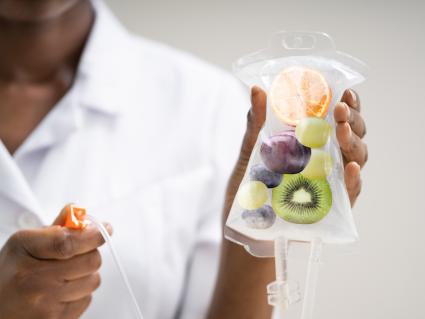
Q: If you are in remission and do IV vitamin C, will the remaining cancer cells be killed and completely be gone?
A: There is evidence showing that vitamin C can do this, but there is no way to predict which individual will demonstrate that response. It is certainly the intention of use of high dose IV vitamin C to eradicate tumor cells.