Self-Care In Community
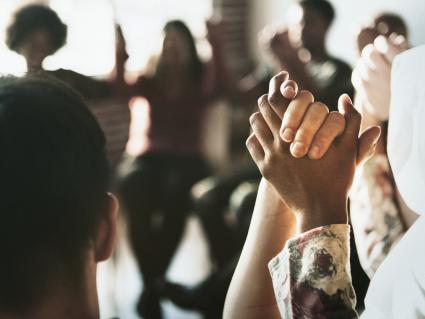
As we turn towards a new season, shedding the cold winter air from our skin, our mind and body adjusts to the inevitable and relieving change in the weather, which can also open more opportunity to change up our behaviors and perspectives. Self-care has always been important. Especially now, as we embark on political and social uncertainty, caring for ourselves and each other is imperative to our survival. To those living with chronic illness, self-care is a large pillar in the foundation of living life with meaning. Learning to separate from the systems that are meant to oppress and harm, and no longer keeping up with expectations that are not suitable nor possible for all people.
It’s important to look at history to understand the origins of certain practices, like self-care, as this term can sometimes just look like beauty maintenance (Goodar). The origin of self-care is tied to human existence, caring for ourselves, our communities, and the earth. In the 1950’s the term “self-care” began to emerge in medicine and healthcare, to care for the mentally ill and the elderly and to those in helping professions, as way to prevent compassion fatigue and burn out (Goodar). However, because of the oppressive systems in place, this term became co-opted, making the ability to practice self-care more exclusive to those that could afford to spend money on spas, country clubs, health treatments, vacations and so on (Goodar). We see this now in the wellness industry, pushing us to spend money on items we don’t need for our own well-being. In the 1960’s and 70s, when it came to community care, the Black Panther Party, was the first to introduce prevention and health related programs, like meditation and nutritional meals to the black community in Oakland, California. Black feminists such as, Audre Lorde, coined this term as an act of resistance, making statements such as, “Caring for myself is not self-indulgence, it is self-preservation, and that is an act of political warfare.” (Breaking Isolation, 2015)
We ultimately all need each other. Self-care is not just about the individual, it’s about all of us. For example, look at nature and its ecosystems; mushrooms communicate and cooperate through an underground mycorrhizal network called the "wood-wide web", allowing trees to share resources and potentially warn each other of threats (Geddes, 2022). Spiritual, religious and indigenous communities all have a common thread of sharing resources, providing food, shelter, education, connection and guidance (Nimri). Our ancestors can guide us towards what we as humans need now, in a world where we are often too exhausted and overwhelmed with the chaos of life that we forget what is most important.
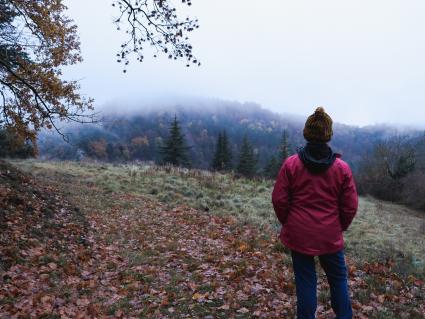
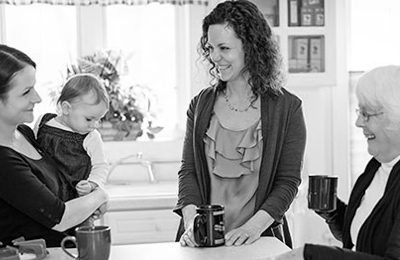
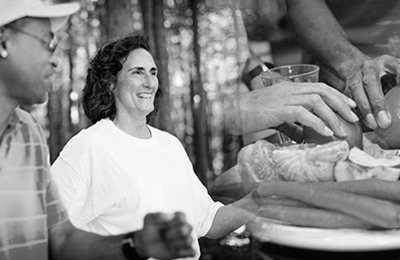
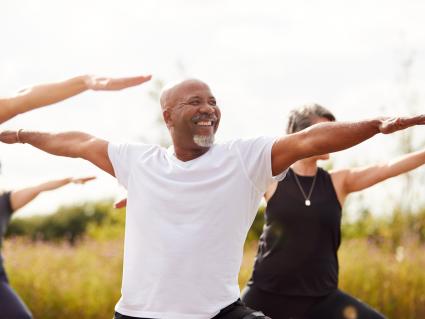
We of course need to have some internal practices to care for ourselves, such as verbal affirmations, solo walks in nature, or setting a boundary and resting when your body is depleted. However, with this internal practice, the intention is not just for the individual to get what it needs, but for the individual to have the energy to then also care for who and what is around them. Self-care in community can be as simple as checking in with your family each night at dinner, what each person is feeling, what they need from one another, and planning actives to be done together that enhance each other and the earth. Self-care in community can be cooking yourself a meal and saving a serving for your elderly neighbor. Self-care in community can look like joining a community garden, a kitchen, an organization, or maybe you start a book or film club with a few friends and neighbors. Self-care is not just about the self, it’s about the world and all that is living in it. Now, more than ever, we owe it to each other or be there for one another, despite our differences, as humans, we can each offer a unique way of connecting and caring for all.
References
Breaking Isolation: Self Care and Community Care Tools for our People. (2015, March 31). The Audre Lorde Project. https://alp.org/breaking-isolation-self-care-and-community-care-tools-our-people
Geddes, L. (2022, April 5). Mushrooms communicate with each other using up to 50 “words”, scientist claims. The Guardian. https://www.theguardian.com/sc...
Goodar, V (n.d). Brief report: Analyzing radical self-care origins and community self-care practice. Community Psychology: Social Justice Through Collaborative Research and Action. (n.d.). https://www.communitypsycholog...
Nimri, N (n.d). Self Care is Collective Care is Community Care. (n.d.). Slowfactory.earth. https://slowfactory.earth/read...