How We Can Expand our Options for Female Pattern Hair Loss in the Integrative & Functional Medicine setting
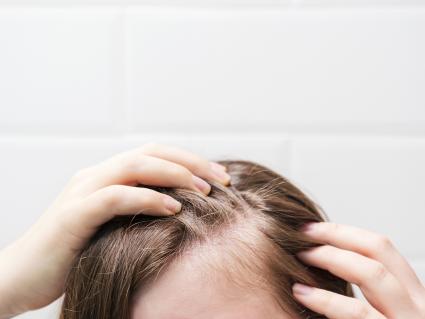
Hair loss is a common condition seen in healthcare today and subsequently, there are multiple different disorders related to hair loss. Today, we will be discussing the most common type of nonscarring hair loss in females, female pattern hair loss (FPHL), also known as androgenic alopecia. We will be discussing how Integrative & Functional Medicine can expand our options for successful treatment outcomes including the use of Platelet Rich Plasma (PRP).
FPHL is characterized by a gradual loss of hair in the frontal and topmost areas of the scalp, typically leaving the frontal hairline unaffected. There is not one known established cause of FPHL. Rather, the cause(s) are multifactorial, involving a combination of genetic predisposition, environmental influence, and hormonal factors.
Science suggests there is an interplay between chronic microinflammation surrounding the hair follicles and an imbalance in reactive oxygen species (ROS), or a group of highly reactive oxygen-containing molecules. The build up of ROS leads to oxidative stress, causing damage to the hair follicle and surrounding cells over time..
The resulting visible reduction of hair density can have a significant impact on quality of life and cause psychosocial distress in those affected. About 12% of females will develop FPHL by age 29, with 25% by age 49, and 41% by age 69.
Considering its prevalence, there are only a limited number of conventional treatment options currently available for FPHL. The two main FDA-approved medications for hair loss include Minoxidil and Finasteride, the latter of which is only FDA approved for men. These options come with several potential side effects, and typically have to be taken long term to maintain the desired effects. They also do not work for everyone. Given the lack of variety and effectiveness of current options, there has been an ongoing search for improved solutions.
We have seen a significant increase in patient interest for other therapeutic options that support hair growth, especially in the female population. When you work with a provider in Integrative & Functional Medicine, assessing for and addressing underlying contributing factors to hair loss will be at the foundation of addressing FPHL.
We achieve optimal outcomes with a personalized approach. We assess dietary influences, not only including what we eat, but how we eat and how our body is digesting the food. We assess your underlying ‘biologic terrain’, looking at gastrointestinal health, nutrient status, hormone markers, environmental exposures, and stress factors. Addressing these factors will not only help to set a foundation supportive of hair growth, but will also help to optimize long term results of more targeted therapies, such as Platelet Rich Plasma Therapy (PRP).
PRP therapy is a minimally invasive treatment option for FPHL with a favorable safety profile that can be added to a personalized treatment plan for FPHL. PRP is a solution of concentrated platelets in plasma derived from your very own blood that is spun down in a specialized centrifuge. A skilled practitioner uses a medical microneedling pen, creating microchannels within the scalp to deliver the PRP at an appropriate depth to the target tissues.
PRP activates multiple signaling pathways involved in the hair follicle cell cycle. Growth factors found in PRP contribute to the enhanced dermal and follicular growth. Histological examination of biopsy samples from treated vs control areas have demonstrated epidermal cell growth, differentiation, new blood vessel formation, and strengthening of extracellular matrices at the hair follicles and surrounding areas.
Several randomized control trials analyzing the application of PRP therapy to FPHL have shown promising evidence demonstrating improved hair density in the PRP group compared to control. Evidence also suggests improved outcomes with sooner intervention in relation to onset of hair loss. The frequency and number of sessions also plays a role in quality of outcomes.
PRP for FPHL has shown high levels of patient satisfaction both in research and in clinical practice. We recommend an emphasis should be placed on the quality of PRP, timing relative to onset of hair loss, quantity & frequency of sessions to achieve optimal outcomes.
When addressing FPHL, we aim to first and foremost address predisposing lifestyle and environmental factors that may be contributing to FPHL. For some, this may be enough to achieve hair regrowth. For others, additional science-backed options, such as PRP therapy, can be implemented in the treatment plan on an individualized basis. The continuous search for better solutions is one of the many ways we can work towards achieving optimized health outcomes in the field of Integrative & Functional Medicine.
https://www.mdpi.com/2075-4426...
https://www.sciencedirect.com/...
https://pmc.ncbi.nlm.nih.gov/a...
https://link.springer.com/arti...